Full edentulism (having no teeth) is a significant problem for many, both aesthetically and functionally. Difficulty chewing, speech impairment, sagging facial contours, and loss of self-confidence are the most common consequences. However, thanks to today’s advanced dental implant treatments, it is possible to reconstruct a permanent, strong, and natural-looking smile even for patients with no teeth at all.
In this guide, we will explore how implant treatment is performed for total tooth loss, the differences between All-on-4 and All-on-6 systems, what to do if there is bone loss, and how the treatment process unfolds.
What is Full Edentulism and Why Does It Matter?
Full edentulism is the condition where all natural teeth in the upper or lower jaw (or both) have been lost. When teeth are missing for a long time, the jawbone begins to resorb (melt away). This is not just an aesthetic issue but a biomechanical one. As bone loss progresses, placing fixed prostheses can become more challenging.
Therefore, early planning is crucial for edentulous patients. Modern implantology allows for successful treatment even in patients with significant bone loss through correct surgical techniques and expert evaluation.
How Are Implants Placed When There Are No Teeth?
For fully edentulous patients, a fixed bridge prosthesis is typically planned by placing a specific number of implants into the jaw. The two most commonly applied systems today are:
In these systems, 4 or 6 implants are strategically placed at specific angles into the jawbone, and a fixed full-arch prosthesis is attached. This eliminates the need for removable “dentures” or “plates.”
All-on-4 vs. All-on-6: Which is Better?
There is no single “right” answer to this question. The choice of system depends entirely on the patient’s:
- Bone density and volume
- Jaw anatomy
- Biting force
- General health status
Choosing between All-on-4 and All-on-6 is not a commercial decision. The goal is not simply to place more implants, but to determine the most accurate biomechanical solution to ensure long-term stability. The final decision is made following a multidisciplinary consultation between implant surgeons, prosthodontists, and periodontists at Attelia Oral & Dental Health Hospitals.
GET A FREE QUOTE
Can Implants Be Done If There Is Bone Loss?
Yes, in most cases, they can. For patients who have been toothless for a long time, bone volume may have decreased. In such cases:
- Bone grafting (bone powder) applications
- Sinus lifting procedures
- Specially angled implant placement
- Advanced surgical techniques
Each patient undergoes a detailed analysis with 3D imaging (CT scans) to create a personalized surgical plan.
How Does the Treatment Process Work?
The journey to your new smile generally consists of these steps:
- Detailed examination and 3D CT analysis
- Digital surgical planning
- Implant placement surgery
- Application of a temporary fixed prosthesis (so you are never without teeth)
- Preparation and fitting of the final permanent prosthesis
Auraliss Health: Expertise and Clinical Power
Auraliss Health, based in Antalya, Turkey, is an international health tourism provider. Operating under the clinical strength of Attelia Oral & Dental Health Hospitals, Auraliss serves as the official international marketing and patient coordination team.
With nearly half a century of clinical experience, our treatments are carried out directly by specialized doctors:
- Implantologists plan the surgery.
- Prosthodontists design the aesthetic restorations.
- Periodontists manage gum health.
Can I definitely get implants if I have no teeth?
Is the implant procedure painful?
How long does the treatment take?
Can I get information before traveling from abroad?
Absolutely. We offer online consultations. By sending your X-rays and photos, you can receive a preliminary evaluation and estimated quote before booking your flight.

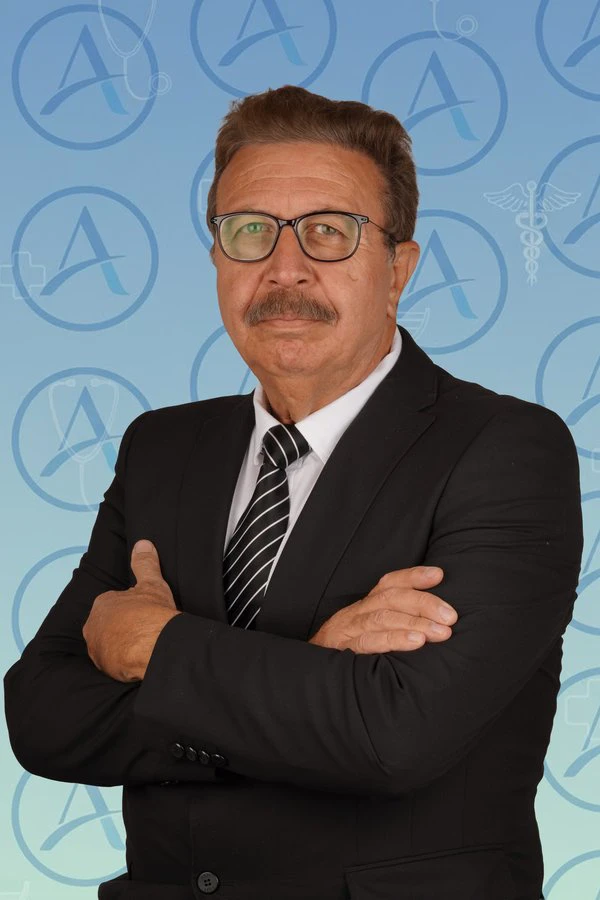
Dr. Mehmet İşlek, DDS
Founder of Auraliss Health & Medical Director
Dr. Mehmet İşlek is one of the most experienced and innovative dentists in Antalya, with a career spanning over four decades. Building on this long-standing clinical expertise, he founded Auraliss Health as an international health tourism intermediary brand to extend the same high medical standards of care to patients from global destinations.
A graduate of Dicle University Faculty of Dentistry (1982), Dr. İşlek is the medical director of Auraliss Health and the owner of Attelia Oral and Dental Health Centre, a fully authorised and Ministry-licensed dental hospital. His clinical leadership ensures that all treatments coordinated through Auraliss Health meet international medical standards and ethical guidelines.
Languages: English, Turkish · Expertise: Implant Dentistry, Aesthetic Dentistry, Prosthetic Rehabilitation