Auraliss Health, powered by Attelia Oral & Dental Hospitals, offers advanced dental implant treatment in Antalya. Patients also receive long-term aftercare support in UK, Norway and Germany. Dental implants are a reliable way to replace missing teeth and restore your smile and chewing function.
At Auraliss, implant treatment is planned as a full rehabilitation process, not a single procedure. Each case is designed with 3D CBCT scans and digital impressions. This helps placing the implants accurately and supports stable healing.
For international patients, care continues after you return home. Local aftercare clinics in the United Kingdom, Germany, Norway and Turkey provide follow-up checks and small adjustments. This keeps your treatment safe and stable over time.
What Are Dental Implants and How Do They Work?
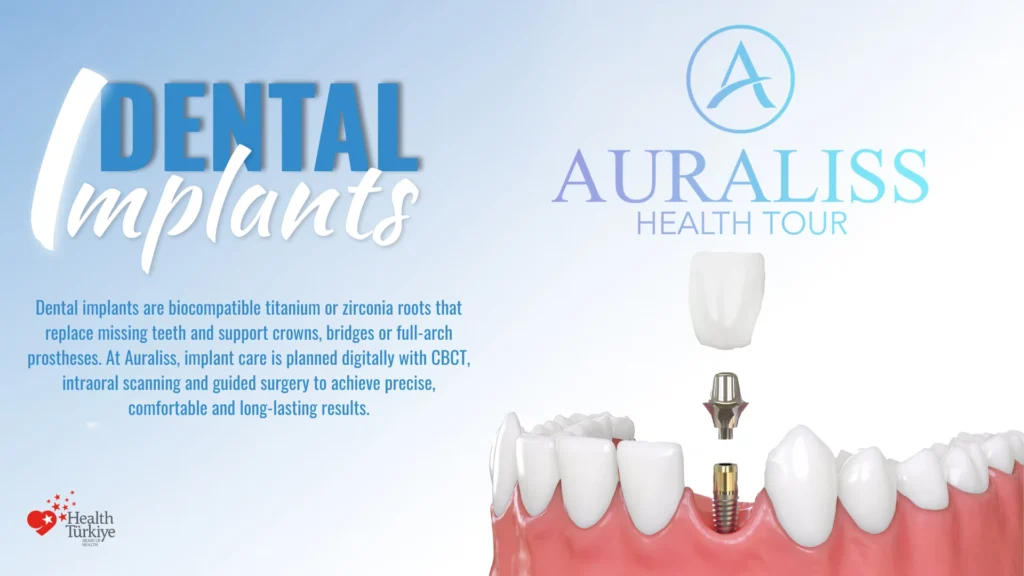
Dental implants are small titanium or zirconia roots placed into the jawbone to replace missing natural tooth roots. After placement, the implant bonds naturally with the bone through a healing process called osseointegration. This creates a strong and stable base for crowns, bridges and full-arch teeth.
Because implants connect directly to the bone, they work and feel like natural teeth. They help protect the jawbone, maintain facial shape and allow comfortable chewing. Implants can replace a single missing tooth, several teeth or a full dental arch in patients with loose, damaged or missing teeth.
Before any treatment is recommended, the Auraliss medical team carefully checks bone quality, bite alignment and overall oral health. The goal is not only to improve appearance but to create long-term comfort, stability and healthy function.
Dental Implants in Turkey for International Patients
Dental implant treatment in Turkey has become a preferred option for patients travelling from the United Kingdom and Europe. At Auraliss Health, treatment is organised specifically for international patients who are looking for predictable results, clear planning and long-term support after returning home.
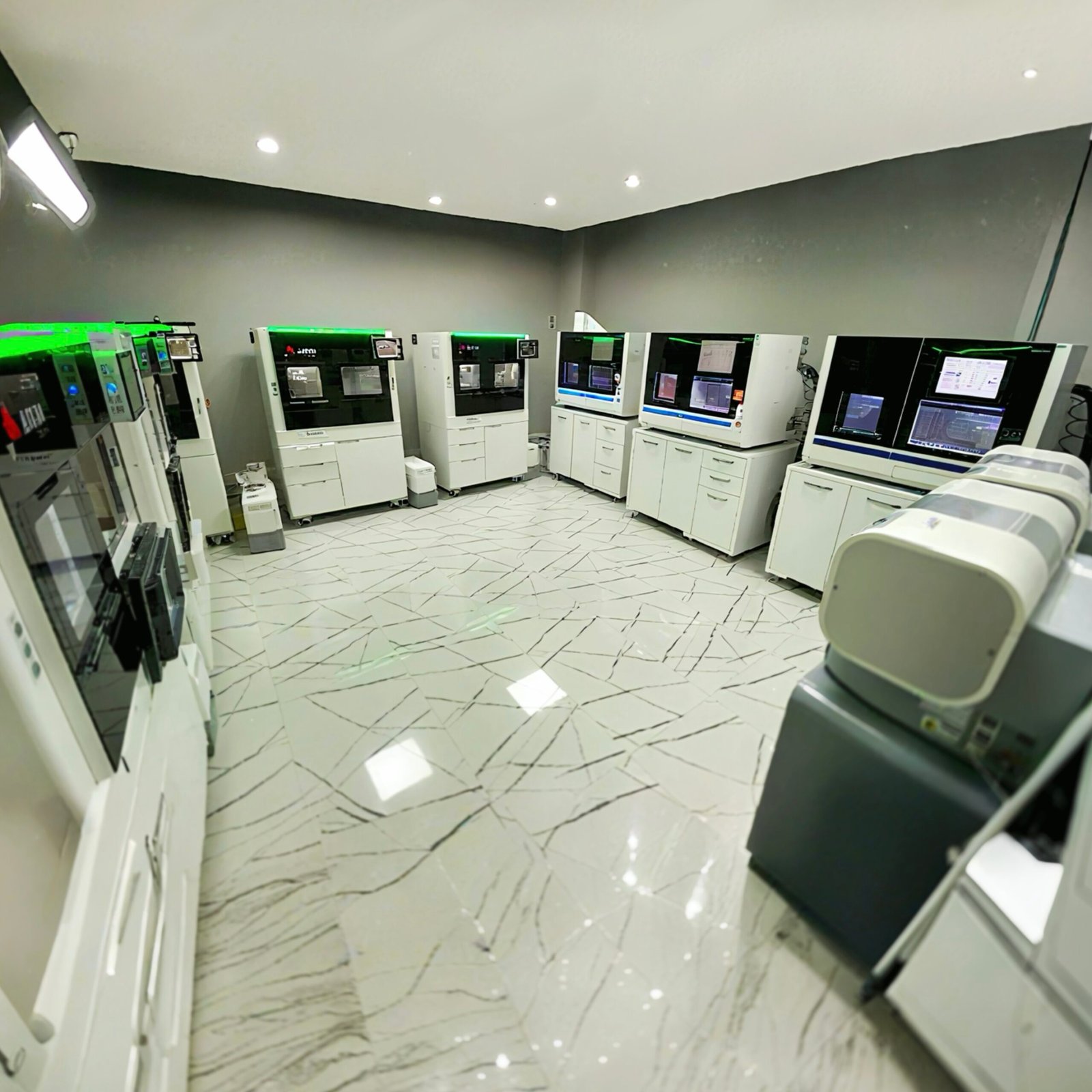
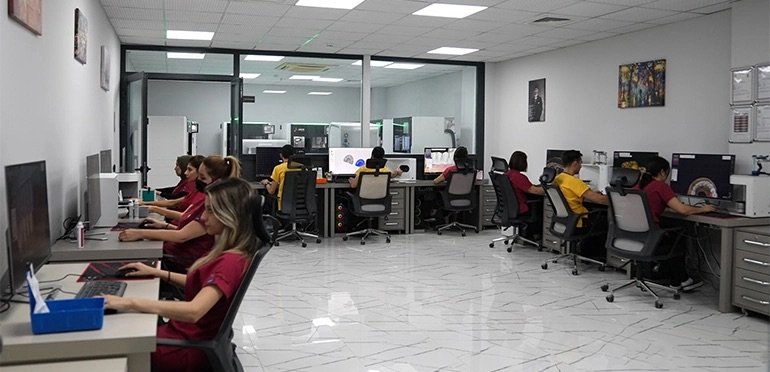
Implant care is delivered in Antalya through modern dental hospitals equipped with digital imaging, guided surgery systems and in-house laboratories. Each case is planned as a complete rehabilitation, focusing on bite stability, bone health and natural appearance rather than short-term cosmetic fixes.
What makes this approach different is continuity of care. After returning home, patients can access follow-up checks and professional support through local aftercare clinics in selected European countries. This structure allows patients to continue their recovery safely without unnecessary travel.
Why International Patients Choose Auraliss
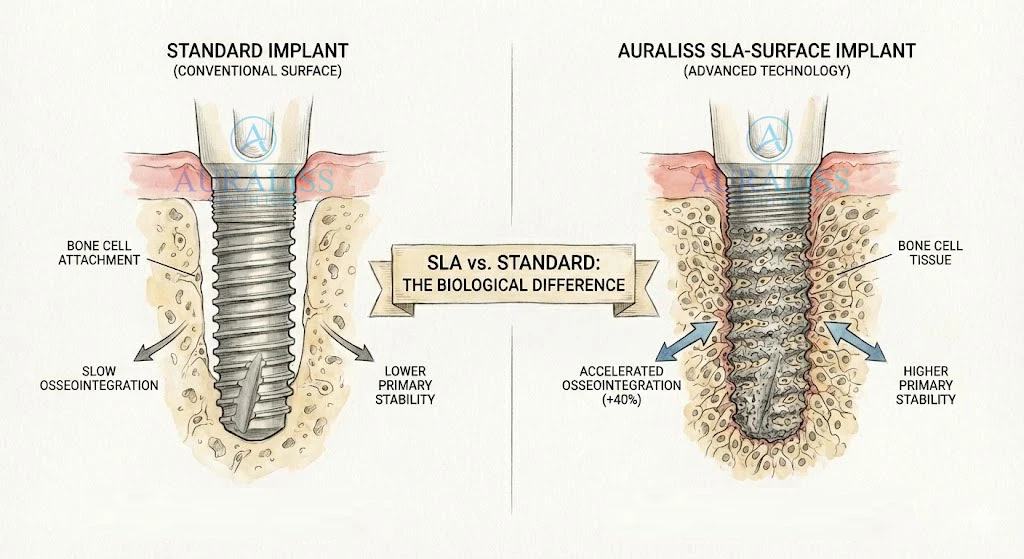
Patients choose Auraliss because we prioritize biological stability over standard solutions. We exclusively use SLA-surface implants, a technology designed to accelerate osseointegration (the fusion of bone to implant) by up to 40%.
This advanced surface structure ensures 40% higher primary stability compared to conventional implants, significantly reducing healing time and increasing treatment security.
Each case is then prepared digitally to match bone structure, facial balance, and dental needs. This combination of superior implant biology and digital planning creates natural-looking and reliable results.
All treatments are performed in modern dental hospitals in Antalya using internationally recognised implant systems and custom-made restorations. After treatment, patients can receive free follow-up care in certain points in UK, Norway and Germany. This allows regular checks and professional support without travelling back to Turkey.
All-on-6 Dental Implants Explained
All-on-6 dental implants are a full-arch solution designed for patients with multiple missing or failing teeth who want fixed teeth rather than removable dentures. Six implants are strategically placed to support a full set of upper or lower teeth.
Compared to other full-arch solutions, All-on-6 can offer increased load distribution and stability in patients with suitable bone structure. The exact number of implants is determined after CBCT imaging and clinical assessment to ensure long-term success and comfortable function.
What Affects the Cost of Dental Implants in Turkey
The cost of dental implant treatment varies from patient to patient because each case requires a personalised medical plan. Rather than offering standard pricing, treatment is designed around clinical needs and long-term stability.
Several factors influence the overall treatment cost:
- The number of implants required and the type of restoration planned
- Bone quality and whether additional procedures are needed
- Digital planning, CBCT imaging and guided implant placement
- Implant systems and restorative materials used
- Laboratory work for crowns, bridges or full-arch teeth
- Aftercare structure and long-term follow-up support
For full mouth
dental implants in Turkey, treatment is planned as a complete rehabilitation process. This approach prioritises safety, accuracy and long-term results rather than focusing on short-term pricing alone.
Why Choose Turkey for Dental Implants?
Turkey is one of Europe’s leading destinations for dental implant treatment. The country offers modern dental
hospitals, experienced surgical teams and internationally accredited clinics. High patient volumes help clinics
maintain high standards while keeping treatment more accessible.
Auraliss Health powered by Attelia Oral & Dental Hospitals operates in Antalya, one of Turkey’s main medical tourism centres. The city offers modern dental hospitals, digital laboratories and internationally recognised implant systems.
Dental Implants in the UK and Why Some Patients Choose Treatment Abroad
Many patients researching dental implants in the UK also explore treatment options abroad. This is usually related to treatment availability, waiting times and the structure of private care rather than dissatisfaction with local dentistry.
Healing Process and Home Care
After implant placement, mild swelling or tenderness may occur for a short time. During healing, patients should
eat soft foods, keep good oral hygiene and avoid smoking to support proper bone healing. Personal aftercare
instructions are provided for each patient.
Local aftercare clinics monitor your healing progress and help keep your implants stable and comfortable over time.
How Long Do Dental Implants Last
Dental implants are designed as a long-term solution for missing teeth. When properly planned, placed and maintained, implants can last for many years and often decades.
Longevity depends on several factors:
- Accurate implant placement and bone integration
- Good oral hygiene and daily care
- Avoiding smoking during healing
- Regular professional follow-up and bite checks
At Auraliss Health, implant treatment focuses on long-term stability. Digital planning, guided surgery and continued aftercare support help protect implant health over time.
Implant Materials and International Standards
Watch real patient stories and smile transformations treated through Auraliss Health powered by Attelia Oral & Dental Hospitals. These videos show real treatment journeys and results.
Real Patients and Video Stories
Watch real patient stories and smile transformations treated through Auraliss Health powered by Attelia Oral & Dental Hospitals. These videos show real treatment journeys and real results.
Start Your Free Implant Consultation
Send your photos or dental X-rays online and receive your personal treatment plan within 24 hours. There is no obligation to continue.
Request Your Free Dental Consultation Today!
Dental Implants in Antalya, Turkey
Antalya is one of the main medical tourism centres in Turkey for advanced dental implant treatment. The city offers modern dental hospitals, digital laboratories and internationally recognised implant systems.
Auraliss Health powered by Attelia Oral & Dental Hospitals provides implant treatment in Antalya using a full rehabilitation approach. Each treatment plan is prepared digitally to ensure long-term stability, comfort and natural-looking results.
Patients researching dental implants in Turkey often look for:
- Full mouth dental implants in Turkey
- All-on-4 and All-on-6 fixed teeth solutions
- Treatment planning in Antalya
- European aftercare support
- All-inclusive implant treatment journeys
The exact treatment plan is determined after digital CBCT imaging and personalised medical review.
Full Mouth Dental Implants in Turkey
Full mouth dental implants are designed for patients who have loose, damaged or missing teeth and want a fixed solution instead of removable dentures.
This type of treatment is commonly chosen by patients who:
- Have difficulty chewing with dentures
- Experience loose or failing teeth
- Want fixed teeth instead of removable prosthetics
- Are researching All-on-6 dental implants in Turkey
Each treatment plan is created individually after CBCT imaging, digital impressions and medical review.